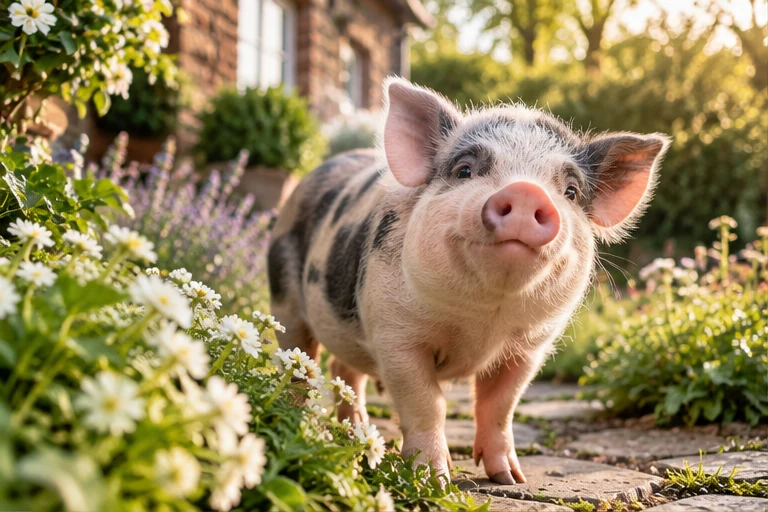
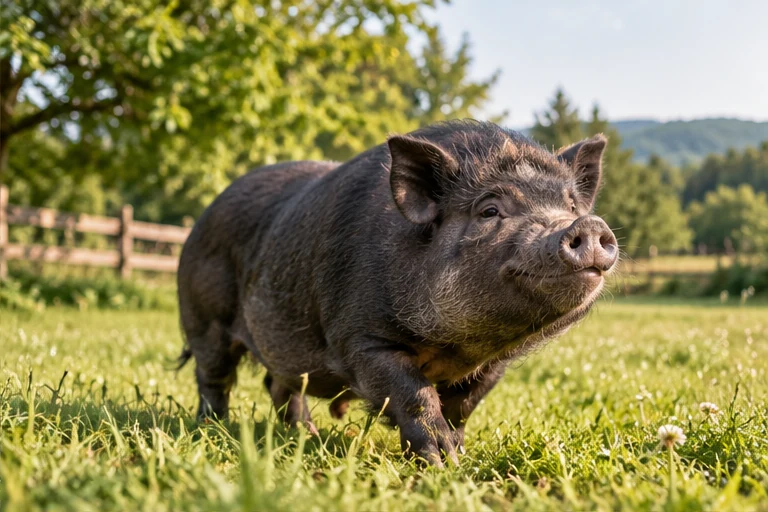
Good food, happy snouts.
A thoughtful feeding routine supports a healthy pig, with room for a little curiosity and a well-earned treat.
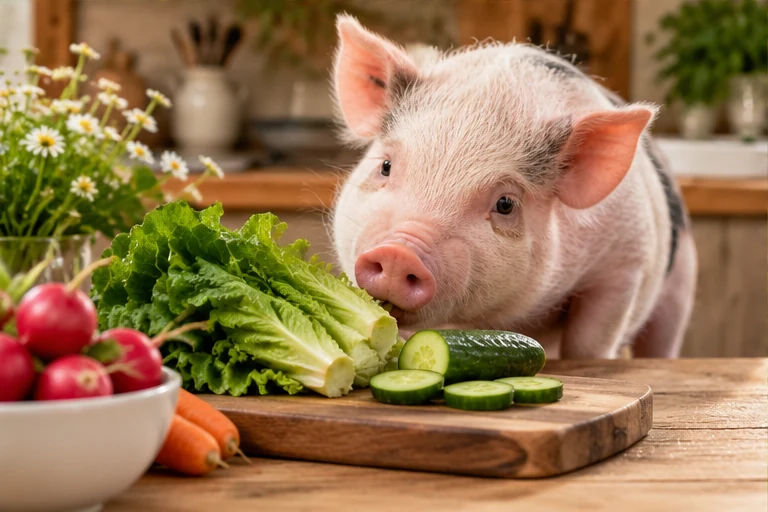
THE FEEDING GUIDE
What goes in the bowl?
A few starting categories—always check individual needs with your vet.
The nourishing foundation
Balanced, age-appropriate pet-pig feed, clean water, and suitable vegetables or fibre sources as advised for your animal.
Small rewards, big motivation
Tiny portions of suitable fruit or vegetables can be useful for training. Treats should remain a small part of the whole diet.
Keep these out of reach
Chocolate, caffeinated products, spoiled foods, excessive salt, and dog or cat diets are not suitable replacements for pig food.
Feed for health, not for smallness
One of the most persistent myths about mini pigs is that restricting food can keep them permanently tiny. It cannot change an animal’s genetic potential, and underfeeding can compromise welfare. A healthy feeding plan aims to support normal growth, appropriate body condition and steady energy—not an artificially small appearance.
A balanced, age-appropriate commercial diet formulated for pet pigs is usually the foundation. Food portions depend on age, body condition, activity, health and the specific feed. Ask a veterinarian familiar with pigs to assess the individual animal and help set an appropriate plan. Avoid copying serving sizes from a stranger’s pet on social media.
The essentials of a good routine
Provide clean water at all times. Keep bowls hygienic and heavy enough not to overturn easily. Offer meals on a consistent schedule and observe how your pig responds. Unexpectedly leaving food untouched, especially with other changes in behaviour, can be a sign that something is wrong.
Appropriate vegetables may add variety and create enjoyable foraging opportunities. Fruit and higher-calorie foods are better regarded as occasional treats rather than the basis of the diet. A balanced feeding routine should still offer opportunities to explore, sniff and work for part of a meal.
Choose treats thoughtfully
Mini pigs often learn quickly when small treats are offered for desired behaviours. Keep rewards tiny and account for them in the overall diet. For some pigs, calm praise, exploration or access to an enjoyable activity can also be motivating. The goal of training is communication, not unlimited snacking.
When introducing a new food, start cautiously, check that it is appropriate for pigs and monitor your animal. Food suitability can vary with individual health conditions. If in doubt, ask a veterinary professional rather than relying on lists shared without context.
Foods and habits to avoid
Never substitute dog or cat food for a pig-specific balanced diet. Limit foods that are excessively salty, fatty or sugary. Keep chocolate and caffeinated products away from pigs, and do not offer spoiled food. Secure your kitchen: an intelligent pig can learn to open a cupboard long before you expect it.
Avoid sudden major changes in feeding. Growing animals, older pigs, pregnant pigs and those managing illness may need different plans. Unexplained weight gain or loss deserves professional assessment. A visual body-condition review and regular veterinary guidance are more useful than trying to hit an arbitrary number on a scale.
Foraging makes meals richer
Pigs have an extraordinary sense of smell. Part of a measured meal can be offered in a safe puzzle feeder or scattered in a supervised, pig-safe area. This gives a familiar instinct a constructive outlet. Use washable containers and remove anything that can be chewed into unsafe pieces.
Food should support a healthy, interesting life. It should not be used to manufacture a “teacup” pig or to compensate for a lack of exercise, companionship and enrichment.
Important: this guide is general education, not an individual ration plan. Discuss feeding amounts, suspected deficiencies and medical diets with a qualified veterinarian.
Keep exploring the MiniPigus guide.
There is always one more good question to ask.
LEARN A LITTLE MORE