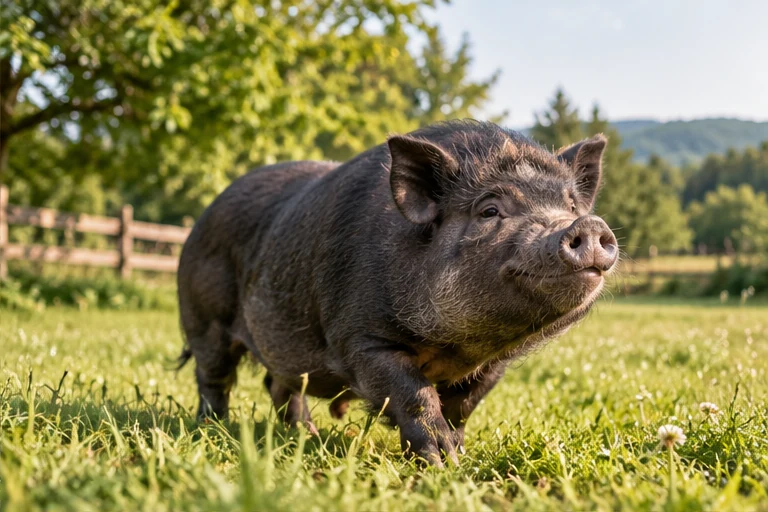
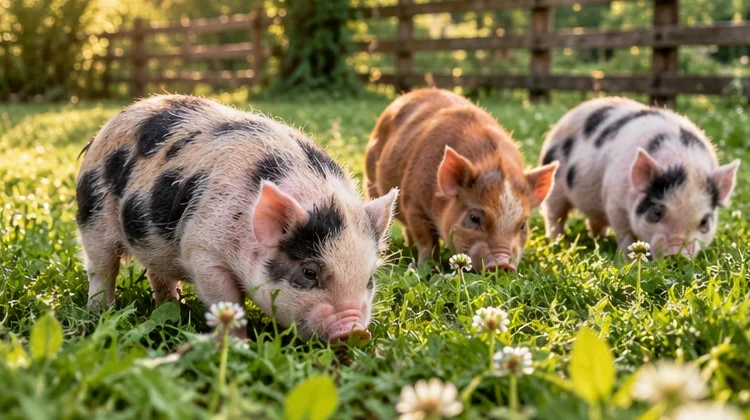
Big minds, gentle lessons.
A little patience and a lot of curiosity help build trust, communication and enriching daily experiences.
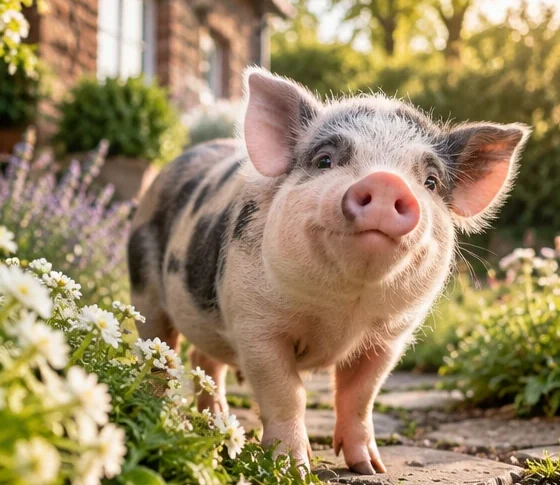
Think like a curious pig
Pigs spend much of their time investigating their surroundings with their noses. They remember where interesting things happened, notice routines and learn how their behaviour affects the world. When we describe a pig as “stubborn,” we may be overlooking a strong motivation, uncertainty or an environment that does not meet its needs.
Begin training by asking what the pig is trying to achieve. Is it looking for food, a quiet place, social contact or a way out of an uncomfortable situation? Understanding the reason behind a behaviour is more effective than merely trying to stop it.
Build trust before teaching tricks
A calm relationship is built from repeated, predictable experiences. Let your pig approach willingly, reward relaxed interactions and use gentle handling. Keep training sessions short. A simple cue such as coming when called is more useful when practised in a quiet room before being attempted in a busy garden.
Positive reinforcement means rewarding a behaviour you want to see again. Rewards can be tiny appropriate food pieces, praise or access to a preferred activity. Avoid punishment, physical intimidation and forcing an animal to remain in a stressful situation. These can undermine trust and create safety problems.
Five enriching activities
1. A simple rooting box
Fill a sturdy container with pig-safe, non-edible materials that cannot easily be swallowed. Supervise early sessions and hide a few appropriately sized rewards. Change the layout to keep exploration interesting.
2. A slow discovery walk
Offer supervised time in a safely fenced area and allow plenty of sniffing. Exploration should take priority over covering distance or maintaining an exact pace.
3. Target training
Teach your pig to gently touch a target with its nose, then follow that target a short distance. This skill can help make everyday handling more cooperative.
4. A small treasure hunt
Place a few measured food rewards in visible, safe locations. As your pig learns the game, vary the hiding places without creating frustration or allowing access to hazards.
5. A calm choice game
Offer two safe enrichment items and watch which one your pig chooses. Respecting simple preferences is a good way to create a sense of predictability and control.
House training and routines
Many pigs can learn an appropriate elimination area. Choose an accessible location away from bedding and meals, maintain predictable access, and reinforce success. Accidents can occur when an animal is young, unsettled, ill or unable to reach the designated area. Sudden changes deserve investigation rather than punishment.
Living alongside other animals
Pigs and dogs have different communication styles. Even a friendly dog can unintentionally injure a pig or trigger fear. Introductions require careful management and separation when unsupervised. A household that works well for one pair of animals may not be safe for another.
Good behaviour is not constant obedience. It is a conversation built from safety, routine, appropriate outlets for natural instincts and ongoing patience.
Keep exploring the MiniPigus guide.
There is always one more good question to ask.
LEARN A LITTLE MORE